

Cleansing and Healing The Female Reproductive Tract – With Modifications For Men
Note: though this article is written with women’s reproductive system health as the main focus, virtually all concepts are applicable to men as well, as are the cleansing and healing procedures outlined in the second section. The end of the article specifically addresses adapting what is outlined in the procedures to use by men.
Common Reproductive Health Concerns that Arise On the Healing Journey
At the beginning of the healing process with Nutritional Balancing, many women have concerns with vaginal health. These concerns can also arise as healing crises well into the healing journey. At times this can be years after starting a Nutritional Balancing healing journey. I experienced this myself, about seven years after starting healing with Nutritional Balancing.
Remember that the body, in its wisdom, decides which problems to heal when. This is an important principle in Nutritional Balancing — to allow the body to determine what to heal when. So a problem like a very old infection that is just barely lingering, say in a reproductive structure or just generally, in the pelvic region, for example — may not be deemed of highest priority for healing. As a rule, reproductive processes and reproductive health generally will often be a “lower priority” to the body, than many other concerns. So it literally could be seven years into the process before something like this comes up for healing.
Usually these concerns when they arise are mild and can be easily addressed through simple cleansing and healing methods. Also, in most all cases, when a person is on a Nutritional Balancing healing plan, an “infection flare up” will actually be a healing crisis, and this means the body is in the process of healing some infection or toxicity or other problem from the past. We address it, like any other healing crisis — by providing support to the body but if possible avoiding extreme measures, like, for example, antibiotics.
The procedures outlined here can be used to help you move more smoothly and completely through a healing crisis. This is true even when the infection or toxins are not necessarily associated with the reproductive tract; more about this momentarily.
In the event that you are in fact dealing with a new infection, which is rare if a person is following a Nutritional Balancing nutrition plan, but which can happen, these procedures may also support you while you wait to get professional advice. Not every problem of this type will necessarily require medical intervention, but some will. It is important to distinguish between a new and acute infection and a healing crisis wherein an old infection is being addressed by the body’s defenses. This article will provide some guidance on this topic, but other articles cover it in more depth.
What Is Covered In This Article
The first portion of this article will cover some basics about these common conditions, for example causes and concerns that are associated with them. The second portion will give instructions for carrying out the cleansing and healing procedures.
More complex (and often deeper rooted) concerns women may encounter with their reproductive health, such as infertility, amenorrhea (cessation of menstrual periods), endometriosis, etc., will not be addressed in this article.
Applicable to Men Too
As noted in the introduction, there is some mention at the end of the article as to how several of these procedures can be used by men, too. Though the procedures differ slightly for men, the basic idea in each case is the same. This will need to suffice until I have the opportunity to write an equivalent article for men.
These Methods Help With Many Flare Ups And Detox Reactions
The cleansing methods will help to address not only common, mild infections and healing crises, but also the healing of other common reproductive system dysfunctions women may experience, from painful menstrual periods, to PMS and ovarian cysts. They also can help with healing crises that involve infections that are elsewhere in the body. For example, a sinus infection or a skin infection, even if it is not specifically in the reproductive tract, can be helped by the cleansing methods outlined here.
Even the healing of traumas and releasing of emotional disturbances can be assisted by using these methods. This may sound strange at first but it is true.
A main reason why traumas of all kinds and even emotional disturbances can be assisted to clear through use of these methods is that our bodies tend to “store” many types of emotional residues (ie, what is unprocessed/unresolved) in the hip and pelvic region. This is true for both women and men.
The procedures have both “chemical” and “energetic” actions, assisting us to clear and release old stagnant stuff, like toxins and emotional “debris,” not just biochemical and cellular debris.
In some ways these methods are similar to liver flushes in that sense. Liver flushes can be excellent for helping to lift out accumulations of unprocessed difficult and heavy emotions like anger. Anger in particular can burden the liver and cause a great deal of dysfunction both mentally/emotionally and physically.
The Female Reproductive Tract, “Dysbiosis” and Common Symptoms And Discomforts
The female reproductive tract consists of all the internal organs involved in reproduction, from the vagina to the ovaries. It include the fallopian tubes and the uterus and cervix.
While this area of a woman’s body is protected due to its hidden, internal nature, of course it is very much accessible to microbes and microbes are a normal inhabitant of this area. Disorders of the vaginal microbiome are as common as disorders of the intestinal microbiome.
Common concerns that stem from imbalances in the microbiome of the vagina are itching, odors and excessive vaginal discharge. Problems affecting fertility and ovarian function can also in some cases be connected to dysbiosis, as can PMS and painful periods. “Dysbiosis” simply means a disorder of the microbiome — in other words, too many pathogens or undesirable species of bacteria and / or yeast, without enough of the beneficial strains.
Sometimes also, women may experience a sense of bloating or being “water-logged” or just “weighed down,” or “heavy” in the pelvic area. Other times a woman might experience a dull ache or perhaps some nerve pain in the pelvic region, despite showing up “normal” on a medical exam.
Yeast Infections
Yeast or fungal infection is probably the single most common “infection” that women experience vaginally.
It is not always correct to label this phenomenon an infection because yeasts are a normal inhabitant of the vagina; often it would be more accurate to call problems of this type an “imbalance.” When the microbiome is not properly controlled by the immune system, the yeast and fungal organisms get out of control. Fungal overgrowth can be very unpleasant, particularly due to the metabolic byproducts the yeasts create. The problem of mild to severe yeast overgrowth is so common that virtually every woman has experienced this. Its not uncommon for it to be a problem both in the intestines and vagina.
While it would seem that this should be an easy situation to resolve, this is not always the case. In the conventional medical world, a woman is given a prescription antifungal to address a vaginal yeast infection. Though this may help for a time, frequently, the problem just comes back again later because the underlying cause has not been addressed.
The holistic approach involves healing the whole person and improving immune function and detoxification. At times, with Nutritional Balancing, it can take several months of a good diet to get a chronic problem of this type under control. A problem that has not reached a point of becoming chronic will usually resolve more quickly. Chronic problems of this nature are actually extremely common, however.
Its important to know the causes of this condition, so let’s take a look at these.
Causes of Yeast Infections – Antibiotics
Anyone with a history of antibiotic use, especially repeat courses, may find they develop yeast infections easily and routinely following a course of antibiotics.
Even if it was long ago that you took antibiotics for ear infections, dental work, strep throat or any number of other conditions, the effects can still linger. Antibiotic therapy can set the stage for a battle with fungal infection that lingers for many years.
The reason for this is that antibiotics kill the bacteria that are normal inhabitants of the vagina (and other parts of the body) which keep yeasts under control. After antibiotics are stopped, beneficial bacteria do not always repopulate right away, and when they do return, diversity may be greatly reduced. Certain strains may disappear or be severely reduced. This results in there being too few of the “good” species of bacteria and fungi to keep the “wrong” ones under control.
Excess Sugar or Carbohydrate Consumption And Poor Digestion And Utilization
Another extremely common cause of yeast infections is excess sugar in the diet. The sugar can be actual sugar, but it may simply be eating more fruit or carbohydrate than your body can tolerate. Also when digestion is not very good, this adds another layer of difficulty. Finally, even when carbs and sugars are absorbed and are not particularly excessive, if the ability of the body to “burn” these food components is compromised, this also causes trouble. These problems often occur all together.
Be aware that there are many, many names for sugar that don’t appear as “sugar” on a food label: dextrose, maltodextrin, sucrose, glucose, barley malt, agave nectar and so on. Look up all the names for sugar! Yes, manufacturers do this on purpose. You might think you are not eating sugar when in fact you are. Sugar by any other name feeds pathogens just the same!
On a hair mineral analysis test we can get a sense of whether you are consuming excess carbs and sugars by looking at the calcium to magnesium ratio, called the “sugar and carbohydrate tolerance” ratio. It is not an ironclad indicator in every case but it is very reliable in a general way.
Different people have widely differing tolerance for these types of foods, so even people who really don’t eat much of these foods can have a problem if their tolerance is low. Often, individuals with poor tolerance for carbs and sugars will over-eat these foods and not realize it. They usually crave these foods. Often they have eaten a particular way all their lives and changing it is not easy.
Carbohydrates typically turn into sugar in the body as they get digested. A carbohydrate is only different from a sugar based on how complex the molecule is — so complex carbs as a rule turn to simple sugars as they get broken down during digestion.
If you do not digest well usually other processes like the utilization of what you do absorb will be less than optimal .
Our bodies “burn” carbohydrate as a fuel source. If the body’s fuel handling processes are not working well, this poor utilization problem can also be a factor in infections of all sorts, because what is poorly utilized in your body can then be utilized / eaten by pathogens.
This problem happens due to lack of nutrients that are needed to run certain body processes like the Krebs cycle. The end result is, pathogenic organisms can thrive in a body that is not digesting, absorbing and utilizing what is eaten. This is why the diet sometimes must be rather strict while people are healing.
Weak Immunity and Blood-Sugar Control Issues
If your immune system is weak and/or your body’s blood-sugar regulation system is not functioning well, even very small amounts of fruit or sugar will potentially be too much. This is really part and parcel of the above topic, but it deserves to be mentioned separately for clarity. Exceeding your tolerance can then spark off an episode of yeast overgrowth.
Not only that, once you have yeast growing in an uncontrolled way, these organisms will actually make you crave sugar and foods that feed them.
The most sensitive people have zero tolerance for both fruit and sugar. Usually these will be people with systemic candida or systemic fungal overgrowth. This is not at all uncommon, even in babies, toddlers and children, not to mention adults.
If you are one of these people with zero-tolerance for sugar and fruit, take heart, usually this is going to be temporary. You may need to eliminate these foods for a time, but in most cases, you will be able to have small amounts again after healing has occurred.
For the record, however, I don’t think it is advisable to eat much sugar, ever. Tiny amounts, yes, once you are healed, but the amount that many people think is normal – absolutely not.
Over time, on a Nutritional Balancing healing plan, your blood sugar issues and immune function will improve. Usually in a matter of months you will see certain improvements. Permanent deeper healing will usually will take longer, however, potentially several years if there are more serious imbalances and weaknesses.
Biotypes and Minerals That Factor in to Susceptibility
Some people who have very poor tolerance for sugars, whether natural or refined, are fast oxidizers, who all tend to run low on copper. Copper is a natural antifungal and it is one mineral that we need to have an adequate supply of, in a bioavailable state, in order to mount a proper defense against virtually any infection, whether fungal, bacterial, parasitic or viral.
Slow oxidizers can have trouble with fungal overgrowth for a different reason. Even though they have sufficient copper levels, due to an inability to properly mobilize and utilize their copper, they may have trouble controlling fungal infections and other infections. This is also just due to slow oxidation, which means the body is making energy at a relatively slow rate. Energy is needed to power the immune functions, of course, as well as every other activity in the body.
Infections Elsewhere In the Body
At times, fungal and bacterial overgrowth is “systemic.” This means it is not located in one place on the body, but virtually all over the body. It may be intestinal, on the skin, the fingernails or toenails, maybe in the ears, the sinuses, the lungs or elsewhere. This is most likely to occur in someone who has a suppressed immune system. Though this might sound serious, and indeed it can be when it is severe, in milder forms it is actually extremely common.
In fact, many ear and sinus infections are fungal rather than bacterial, but the medical profession tends to treat certain types of infections as if they were always bacterial. Then antibiotics are given. This tendency to over-utilize antibiotics and failure to accurately assess what type of infection one is actually dealing with, is one reason why fungal infections are so rampant today.
At times these will be infections caused by two very common commensal bacteria (ie “benign hitchhiker” organisms) that are normal but can get out of control or can mutate into pathogenic forms; these are certain species of staphylococcus and streptococcus. If the microbiome is healthy and the immune system is not compromised, the pathogenic strains of these bacterial species will not be able to multiply in our bodies to any degree where they cause problems.
The Big Picture: The Importance of the Microbiome
Scientific research has now shown that bacteria and other microbes inhabit nearly every nook and corner of the human body – for example even the placenta during a pregnancy! This has not been realized until recently. Obviously, infections may have more to do with a loss of the native/normal microbiome, than ever before realized.
Thus, if you have a history of ear or sinus or lung or intestinal infections, know that this can be very much connected to any infections you experience vaginally (or elsewhere in the body, for that matter). If immunity is weak, or other problems cause intolerance for sugars or carbohydrates, or trouble utilizing them, this predisposes a person to all kinds of infections.
For these reasons, there can be a great need to make a concerted effort to rebuild the microbiome, usually focusing on the gut. This is often part and parcel of restoring natural immunity, or, rebuilding the immune system which is dysfunctional or weak in almost everyone these days.
Foods With High Levels of Fungal Contamination
Sometimes, especially in certain susceptible people (often those with significant burdens of chronic infections), certain foods can be triggers for fungal infection and overgrowth.
These are foods that have high amounts of fungal contamination, like nuts, especially peanuts, (which are universally contaminated with aflatoxin from Aspergillus molds) and even many grains. Dried fruit and fresh fruit also can be problem foods due to fungal contamination. Fungal toxins or spores can be present on these foods sometimes in high amounts. Governmental offices actually set limits on how much fungal contamination is allowed on foods, since fungal toxins can be really damaging, even life threatening. Unfortunately in the US the standards are set rather high meaning that relatively high levels of these toxins are allowed. Spores are like the ‘seeds’ from which new fungal organisms grow, and these are often present along with fungal toxins.
The “spore form” of many fungi can live without food or moisture for extreme lengths of time, just hanging out and waiting till conditions are right to begin to grow a colony. When conditions are harsh, they basically “hibernate” in spore form so that they can re-grow later. They also are capable of burrowing into the intestinal lining or surface of the body on which they like to grow. These are highly adapted organisms! This is one reason why when you are healing these types of infections, your body may go through a number of “rounds” of killing these colonies off.
In people with very great sensitivity, there may be an inability to tolerate fermented foods and even probiotics – foods that are natural sources of good bacteria and fungal species. This is likely due to the immune system getting sensitized to anything fungal in origin. In such cases its best to wait before adding fermented foods or certain types of probiotics to the diet.
See the link found on my website for more information about fungal contamination of nuts and other foods (Articles and Updates page – green column – near the bottom). Also see the article titled Healing Diet Guidelines for more comprehensive guidance on how to individualize your diet and a discussion of the problem of fungal contamination of foods.
Food Intolerance Or Allergy
Food intolerance or sensitivity is another factor that might need to be addressed when fungal and other infections are a problem. Exactly what type of intolerance a person has doesn’t matter. If a sensitivity or reactivity of some kind has developed, it is a sign that the body is being harmed by that food. Continuing to eat “reactive” foods tends to cause inflammation, leading to leaky gut and other problems. This includes overburdening the immune system and liver, so it is important to adjust the diet in such cases to avoid reactive foods.
If this is a factor for you, or you suspect it might be, you can do some trials of removing certain foods that you love and crave, to see how this affects you and your symptoms. Unfortunately it is usually these foods that are the most likely to be “problem” foods.
If need be you can go so far as to do an elimination diet to really sort out which foods might be problematic. Another alternative is to get a good quality food allergy/intolerance test performed to help you figure out which foods might be problematic.
Headaches, rashes, depression, irritability, brain fog, joint pain and many other problems potentially can be related to food intolerance or sensitivity.
STI’s or Sexually Transmitted Infections (aka STD’s)
This is a huge category of infections, from the “milder” types like herpes and chlamydia and trichinosis to the “scary” ones like genital warts, gonorrhea, syphillus and HIV/AIDS.
This is not meant to be a complete discussion of this topic, but just an overview of important points related to clearing these if they flare up as part of a healing crisis while you are on a Nutritional Balancing healing plan.
Acute STI’s Should Be Addressed Promptly
In regard to acute infections of this type (in contrast with a flare up or healing crisis, which is NOT acute) there is a need to be very careful to properly assess and address the situation.
While the “less serious” sexually transmitted infections may not absolutely require antibiotic treatment — in other words, a relatively healthy person may manage to overcome such infections without intervention — the serious ones are best dealt with swiftly because they can be dangerous. This usually means antibiotic or other allopathic treatment. If you suspect such an infection and have any doubts — it is best to seek a diagnosis.
One of the concerns as regards these infections, is that for women sometimes there can be no noticeable symptoms. For this reason, if symptoms seem mild or unclear, but the situation is not clearing up with some effort and there is any chance there may be an acute infection or one your body can’t clear on its own, it is better to get a diagnosis and then decide how to proceed.
STI Flare-Ups or Healing Crises
Typically when someone is doing a nutrition plan to heal their body, and symptoms of this type show up “out of the blue,” it is NOT an acute infection. Rather it is an infection from the past, that never fully healed, coming up to be finally healed or at least pushed back further.
It might be comforting to know that a truly healthy body can eliminate, yes, actually eliminate, virtually any infection. So if while you are on a Nutritional Balancing healing plan some STI that you had in the past flares up do not panic.
You may say, how can “XYZ” infection be flaring up? I took antibiotics years ago and it “cured” me. Well, surprise, surprise – often antibiotics don’t fully eliminate infections. In many cases they only push them back far enough that the body’s natural defenses regain control, yet there are still a few of the pathogenic strain of bacteria or other organism hanging out. They are there, just “under the radar” of the body’s immune surveillance system, so to speak.
The immune system has to be fairly strong for there to be complete elimination of the microbes that cause infection. If that strength is not there, the infection is often just sequestered and controlled, but not entirely eliminated.
The Difference Between A Healing Crisis And A New Problem
The key to understanding whether you are dealing with a healing reaction/healing crisis or an ongoing infection, is to be able to recognize the hallmarks of a healing crisis.
When you are having a healing crisis you typically will notice that, after making many health supporting improvements like a better diet and so on, and experiencing many symptomatic improvements, suddenly a flare up occurs. It’s like, five things got better but now I have a major aggravation of – fill in the blank – it doesn’t have to be an infection, though in this case that’s our focus. It could be some other issue but usually it is either an infection or toxins being released or a trauma or emotional concern re-appearing.
There are many other signs of a healing crisis; I will not go into all the details here, but it is important that you are familiar with how a healing crisis appears, and how to handle one. Please be sure that you have read the articles I recommend for you to read on this topic. These are accessible through links on the Articles and Updates page (green column) on my website.
Itching, Odors and Excessive Discharge
These are common problems which are usually easy to solve. However, in the beginning when first starting a nutrition plan you may find that one or another of them flares up and stays flared up for a time. This is because you are experiencing an activation of your immune system. It also relates, often, to a detoxification process. Both of these processes often occur at the same time and can take some time to resolve; anywhere from several days to several weeks.
Itching, odors and discharge typically are related to yeast/fungus or bacteria that are either overgrown or dying off.
Unfortunately, the experience feels pretty much the same whether it is “die off” (which is roughly the same as a healing crisis) or simply an ongoing infection. The key therefore to distinguishing between the two will be to look at the big picture, as outlined above and in the articles discussing healing crises.
Healing Infections Cause An Increase In Toxin Release
Recognize that anytime you have bad bacteria, yeast or fungi dying off, you are experiencing a surge of toxins that need to be cleared. These toxins are irritants; this typically is the cause for the symptoms of itching, odors and excess discharge.
Leukorrhea, Or Excessive Discharge
Excessive vaginal discharge– the proper term for it is “leukorrhea” – deserves special mention because it is strongly associated with increased immune activity.
Vaginal discharge is part of the body’s inherent, natural cleansing process. Most women know this, and they know when what they are experiencing is not normal. If you experience excessive discharge know that the most common cause is going to be a mild vaginal infection or “dysbiosis” like excessive yeast or “bad” bacteria. There are times when you want to be concerned however.
If there is bad smell associated with discharge that is more than mild, or if there is a greenish tint to it, this could be a sign that you need to seek medical advice as these are signs of more serious, or potentially serious infections. Clear or milky colored discharge that does not smell particularly bad is usually not a sign of anything serious.
In some cases excessive discharge is connected to weakness of certain organs or body process like the kidneys or spleen (the Traditional Chinese Medicine spleen, that is – which is connected to digestion and other functions). The kidneys have to do with fluid balance and movement.
If the cleansing methods outlined in the second portion of this article are not sufficient to solve a leukorrhea issue, it may be a sign that there is a need to strengthen the organs mentioned above. Usually this is done by adding an herbal formula. Other times you just need to tighten up the diet so that these organs are not as stressed.
Now for the procedures.
Healing And Cleansing Procedures For The Female Reproductive Tract – With Notes On Adapting them for Men
Now for how to address the health of the vagina and internal reproductive organs with low-tech, highly effective, cleansing and healing procedures.
Coffee enemas
Yes, these address the colon and liver not the vagina. But, everything is connected! If you get the colon and liver functioning much better, quite often vaginal problems and irritations will disappear or become minor.
This is my first recommendation for women experiencing issues in this area. Do the coffee enemas that are recommended in your nutrition plan. These support the detoxification of the whole body and everything seems to work better when they are in place.
Remember your colon is next door neighbors with your vagina, so whatever affects one is likely to affect the other. This is one reason it can be difficult to fully overcome a tendency to vaginal yeast infections until any intestinal yeast issues have been cleared.
When you are overburdened with toxins, your liver will be sluggish, you will usually be constipated – and even if you are not, the colon will usually not empty properly. Then toxins will not exit your body quickly enough, and you will actually re-absorb them. This is called “autointoxication.” This can lead to many symptoms that will clear up if you unburden the liver and colon.
Two of the biggest factors that cause autointoxication are poor digestion and chronic infections. These problems further impair digestion and immune function, so that it becomes a cycle.
You can find my article describing coffee enemas and how to do them on the Articles and Updates page on my website.
Naturally, it may be necessary to do both coffee enemas AND some of the approaches outlined below to really assist the body adequately, whenever problems are more than mild.
Douching
Many women, in decades past would routinely douche following sexual intercourse or at the end of their menstrual period, or whenever they experienced certain problems. While most women today would not consider this necessary or even wise, there is a time and a place for this ancient practice.
When To Use This Method
I believe it is advisable for women to selectively use this procedure when they are distressed by itching, odors or discharge that is flaring up a bit as something clears during a healing crisis. The procedure can keep you more comfortable while the problem gets resolved. It can quickly reduce or even eliminate certain symptoms.
When you are experiencing a problem that is more severe, douching can still be a good approach, but you want to be sure that you are monitoring to check whether other approaches or additional measures might be needed.
I also think that it is wise to douche after sexual intercourse if your husband or partner is not in excellent health. Many infections are continually passed between partners through sexual contact. Even just “dysbiotic” conditions that are not especially pathogenic, but still undesirable can be passed back and forth this way. This can just burden the immune system in someone trying to heal.
The Procedure
The procedure is simple and should be done either while sitting on the toilet or while lying on your back in the bathtub (you can even do it while lying in a bathtub full of water – though this can be tricky).
You can find a re-usable syringe type douching apparatus on Amazon and in drug stores online. You can also use a bag, rather than a syringe type apparatus; but a bag is not so easy to clean the inside of. On the other hand, a bag can be helpful for using a greater amount of fluid. This will not usually be necessary though, because one to two cups of fluid normally is sufficient.
Once you have filled the bulb or bag of the apparatus with the douching solution, you insert the tip of the apparatus gently, about 3 inches, into the vagina and then slowly squeeze the bulb or release the valve on the bag (after making sure to remove the air from the tube if using a bag) to allow the solution to run into the vagina.
In some cases you want to retain it for a minute or two — or up to five or so minutes. Retaining it longer is only possible while lying down of course. Then allow it to drain out. That is all there is to it.
Naturally, lying on your back in the tub, with hips tilted a little upwards (perhaps with a folded up towel under you to assist with this) will help you retain the solution and this will help to obtain a stronger effect when there is a need for more than just a gentle rinse.
For the sitting on the toilet method, pulsing the liquid into the vagina more than one time is helpful. Twice is usually sufficient for this procedure to be effective.
Solutions That Can Be Used For Douching
The procedure can be done with plain (purified) warm water, water with a little vinegar added, or even an herbal tea such as goldenseal, chamomile or calendula. Another option is colloidal silver or even garlic – though this last one has some caveats – this will be discussed at the end of this section.
Goldenseal is an antibacterial and antifungal herb. Chamomile and calendula are both soothing and anti-inflammatory. Calendula also has antibacterial properties.
For a vinegar and water douche, which assists with the pH of the vagina, and can therefore help to reduce the hospitability of the vaginal environment to yeast/fungi – as well as often eliminate mild itching, odors or excess discharge, simply add 1 T. plain natural, organic vinegar to 1 cup of warm water and put this into the douching apparatus.
For the goldenseal douche, make a decoction of goldenseal root using ½ t. goldenseal root boiled in 1 cup of purified water for 20 minutes. Strain and add enough water to make a total of 1 cup of liquid. This is not very strong, but will often be adequate to assist the body to gain control over bacteria and yeast overgrowth and hinder mild irritation caused by a healing crisis. If need be, the strength can be doubled. This could be a little drying to delicate tissues if repeated often.
For a calendula or chamomile douche, make an infusion by steeping 1 tablespoon of one or the other or both herbs in 1-2 cups of boiling hot (purified) water. Steep 10 to 15 minutes. Strain and let the solution cool, then bring the total liquid amount back up to a 1-2 cups if necessary, and use solution this to douche with. This can be soothing for irritations and itching but will also help with fungal and other infections. These herbs are milder and gentler than the goldenseal.
There are other herbs that can potentially be used as antibacterials or antifungals in a douche – goldenseal is far from the only one – however it is fairly “all purpose” in that it assists with both types of infections and is readily available. If you have trouble finding goldenseal in bulk, you can buy capsules and open them up and use the powder.
Colloidal silver can be used in a douche as well, of course. To use colloidal silver, I suggest using about 1 teaspoon of a medium ppm strength solution – for example a 100 ppm silver solution, and add that to the 1 cup of water you use for the douche. This is a fairly mild solution, but this will help greatly to get an overgrowth or dysbiotic condition under control. Like the goldenseal, the strength can be doubled if necessary.
Garlic can be used – though this can be extremely potent and somewhat irritating – in a few cases it may be the right approach. Just know that it may not be the right approach for everyone. You would “juice” the garlic (1-2 cloves) by squeezing it in a press and then pouring the water for the douche over the juiced garlic or put the pressed garlic in a tea bag or ball and soak it in the water and squeeze to get the garlic juice into the solution.
I have also heard of women using an actual clove or two of garlic, scored on the outside so that the juices are released, and putting a string through it, then inserting the cloves into the vagina. I don’t really recommend this for most people because it will be rather irritating, but I suppose there could be a situation where someone had few options available to help get an infection under control, and it might be better to do this than nothing at all. If you are at all sensitive, however, I’d suggest you try all the other available options before this one! Women who are not all particularly sensitive might not find this approach problematic. Be aware that it is likely that you will taste garlic in your mouth if you do use this method!
How Often?
You really do not want to overdo vaginal cleansing as it can dry out these delicate tissues. So do the minimum necessary to get symptoms under control – usually this will be from once every two days up to twice a day.
The douche procedure can be done up to 3 times a day if you are really uncomfortable with fairly intense die-off symptoms. It will be rarely necessary to use the procedure this often, however.
The tampon soaked in yogurt procedure
This is very helpful to soothe irritated tissues and help to re-populate the vagina with some good bacteria. It will also address pH issues similar to the vinegar douche.
The Procedure
The procedure is simple and exactly like what you would expect. Take a tampon and soak it in a bit of high quality yogurt. The more sour the yogurt, the more lactic acid it has and this is part of the benefit. Usually yogurt that has greater numbers of bacteria also tends to be more sour, but this is not always the case.
With some yogurts, you will need to thin it slightly with some water so that it soaks into the tampon better.
Then you want to insert the yogurt-soaked tampon into the vagina while lying down, and stay lying down, for at least 30 minutes.
When To Use This Method
This is particularly good when the problem is fairly mild and you just need a bit of a boost to re-establish a stronger population of good bacteria. For example it is very good to do if you have had to take antibiotics, especially if you know you are prone to vaginal yeast infections. In fact you could even use this method to reduce the risk of a yeast infection while you are taking antibiotics.
The hardest part about this procedure is that the tampon can become difficult to insert after soaking it in the yogurt. If you prefer, you could thin the yogurt a lot and do a douche with it, but you will want to find a way to retain the solution for at least 5 minutes and longer if possible, to give time for the bacteria to migrate into the vaginal tissues.
Another option would be to do the procedure with a vaginal sponge (discussed below in the next section) however, it may be hard to get all the yogurt out of the sponge afterwards, and you do want to do this otherwise you risk potentially having some bad bacteria taking up residence in the sponge. If you choose this option be sure to clean the sponge very thoroughly afterwards.
How Often?
This has to be determined on a case by case basis, but I would suggest that once a day for three days would be about the minimum you would need to do it to make some progress. This procedure will help repopulate the vagina with beneficial bacteria and adjust the pH to help reduce undesirable bacteria and yeast.
The Vaginal Hydrogen Peroxide Implant
This procedure is very helpful for rooting out infections that are hard to clear fully, and not just infections of the vagina and reproductive tract. This is because hydrogen peroxide, used properly, is a form of “oxygen therapy.” In other words, it (oxygenation) can assist the body to clear infections and toxins in a way that is very powerful and safe compared to many other methods.
Many infectious organisms are anaerobes, meaning they prefer, or may be only able to live in an environment with little to no oxygen. The body tissues, on the other hand, are supported by being more fully oxygenated. So oxygen therapies can help the body to thrive while thwarting many undesirable species of bacteria and fungi that are killed or reduced in number when exposed to oxygen.
Furthermore, the vagina is more or less directly connected to the lymphatic system. The lymphatic system is the “highway” somewhat like the system of blood vessels and veins, along which the components of the immune system flow and travel, for instance, the white blood cells and lymphatic fluid. For this reason, women have an advantage over men in that they can easily use this method to help oxygenate their bodies. This method not only increases oxygenation but also helps clear away cellular debris and toxins which are produced by infections.
Whenever the body is coping with significant infectious processes, the lymphatic system is prone to being overburdened and clogged. This then reduces immune effectiveness.
Men can still benefit from this procedure in a similar fashion, the connection with the lymphatics is just not nearly as direct.
Use Food Grade Hydrogen Peroxide If Possible
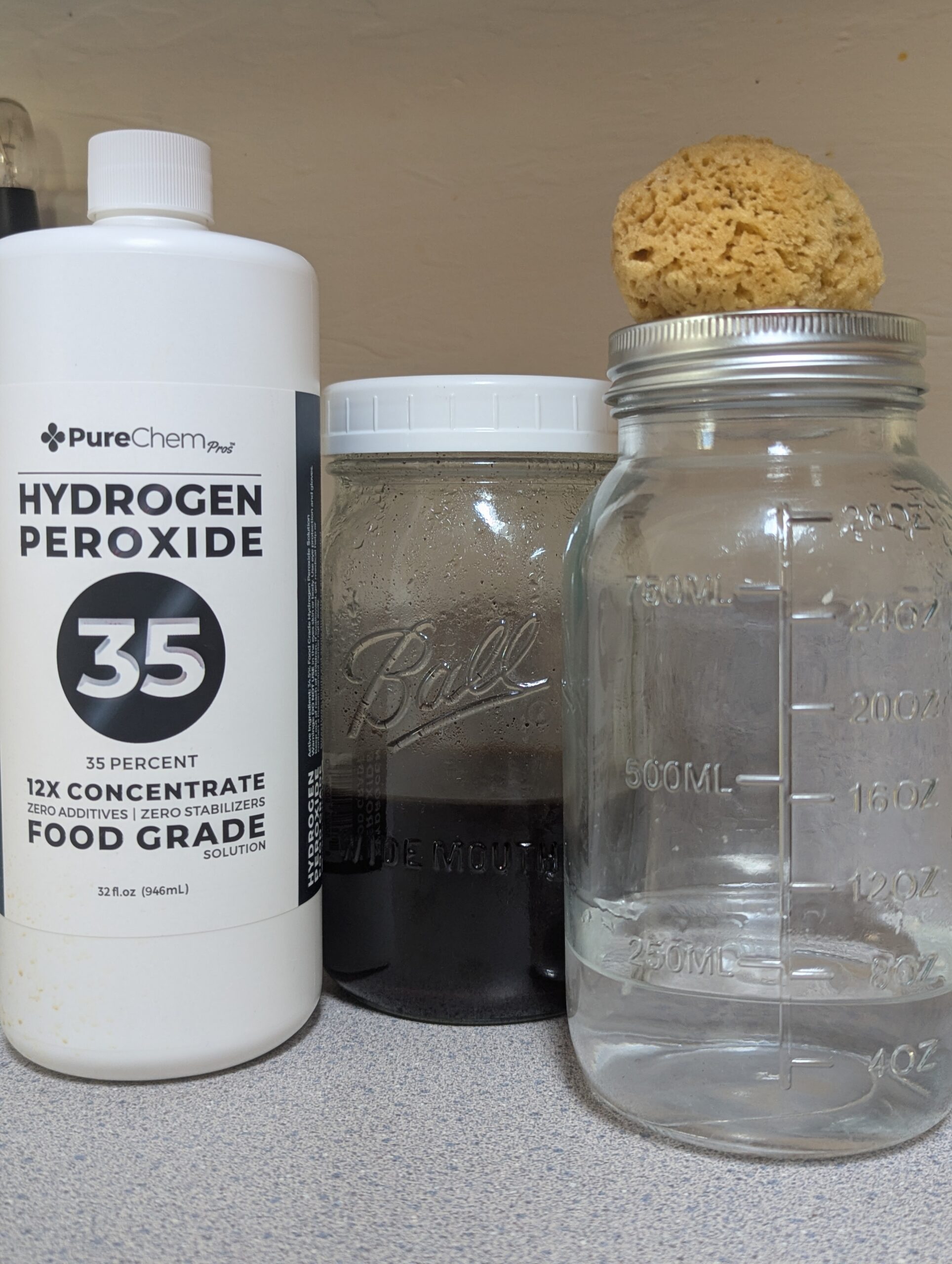
To do this procedure it is best to obtain food grade hydrogen peroxide and dilute it to the correct strength.
You can obtain food grade hydrogen peroxide in strengths of 10% or 35%. You might have to ask for it to find it in a health food store because, at least in the past in some places, the FDA was antagonistic toward businesses that offered this product.
The 35% and 10% solutions are much stronger than what you use to do an implant. You must dilute it correctly or it can burn your skin and put holes in your clothes, so be careful! If you are not steady handed, you may wish to wear gloves while diluting it to the correct strength.
Drugstore hydrogen peroxide is 3% strength as a rule, and it can be used instead, but you cannot always count on it being pure enough for this purpose, nor can you always count on it being exactly 3% strength. In a pinch, though, you can definitely use drugstore hydrogen peroxide, just use caution and test it first for strength by applying it to your skin, or dilute it to about half strength to check how it feels before trying it full strength. If it smells funny, it may not be pure and probably you will want to avoid using it in that case. It should have little to no smell.
Other Materials Needed
To do the implant, you will also need a vaginal sponge. These are sea sponges that are clean and ideally shaped for this purpose. You can order them online. Jade and Pearl is the name of one company that offers them. Amazon has vendors that sell them as well.
You could use an ordinary sponge too, if you prefer, but it must be clean and not previously used for any other purpose; you don’t want to risk putting something that may have toxic residues into the vagina.
Dilute your hydrogen peroxide to 3 % if using the stronger forms of peroxide.
To do this, if you start with 35% peroxide, you will need to use 1 part peroxide to 11 parts purified water.
If using 10% peroxide, you dilute it using 1 part peroxide to 2.5 parts purified water (roughly). Again, use care because strong solutions of hydrogen peroxide can burn your skin.
To do the procedure:
1) The first time or two, start with an extra “weak” solution of hydrogen peroxide – around 1.5 to 2 % — so take your 3% solution and weaken it by adding an equal part water. Alternatively you make a 2/3 strength solution from the 3% strength solution by using two parts of the 3% solution with 1 part water added. This will allow you to gauge your sensitivity to the solution. Everyone is different. If it burns a little bit at this strength you may not want to increase the strength until you have repeated the procedure several times and become accustomed to it. You will gradually become less sensitive to it. At the 1.5 – 2 % strength it should only have a very slight sting if you feel any “burn” at all. Once you have tested this strength and know it is not too strong, you can try it a little stronger; for example, you can use the full 3% solution that you made.
2) Soak your sponge in the solution.
3) Squeeze the sponge very slightly but not completely, so that you will be able to insert it.
4) While lying on your back with some folded up towels under your pelvis to catch any that spills, insert the sponge into the vagina. You should be able to use your fingers to insert it and you should also be able to grab a hold of it with two fingers to remove it. With a little practice, it should not be a problem even for a virgin or a woman who has not birthed a baby to be able to grasp it firmly to be able to remove it. If you are apprehensive about being able to remove it, you may thread a string through the mesh of the sponge for security in knowing you can remove it. Use a plain, unbleached, natural cotton string if you choose to thread a string through it.
5) Leave the sponge in place for at least 20 minutes, and better 30 minutes. Longer than about 40 minutes is not likely to give added benefit.
6) Remove the sponge and wash it thoroughly. You can use a plain natural soap as long as you rinse very thoroughly, but hydrogen peroxide does kill bacteria and most pathogens. There may be a little mucous stuck to it; this is no big deal, just keep rinsing to remove as much as you can, and after washing, let it thoroughly air dry before the next use.
How Often To Do The Vaginal Peroxide Implant
Do this procedure once a day for about one to three months or so, to clear up many infections, help clear toxins and traumas that have settled in this area, and give your body a boost of oxygenation. This helps cleanse the body of many types of unwanted bacteria and yeast, as well as viruses, even ones that do not reside in the genital region.
Be aware that some infections may “hang on” in your body for a long time, so, getting an infection to “finally and completely” clear with this procedure is not necessarily realistic until you are at a certain point in the healing journey. However, at various points along the way, the procedure will help to cleanse and oxygenate the body and clear debris, toxins and infectious organisms.
Be aware that this procedure may increase the amount of discharge you experience afterwards, especially if there are organisms dying-off. So you may prefer to wear a pad or liner afterwards.
The Vaginal Coffee Implant
This is just like the hydrogen peroxide implant except you will use coffee, about the same strength as you use to do a coffee enema (or little weaker), and prepared the same way.
The vaginal coffee implant can have a remarkable “clearing” effect in more than one fashion. Coffee has the ability to clear stuck and stagnant energy, and it boosts our native detoxification processes, whether we use it in an enema or a vaginal implant.
This procedure is especially helpful for clearing out toxins, both biological and “chemical” and also “energetic,” ie — mental, emotional and spiritual.
By “energetic” I mean “toxins” like the kind that can impact us when we have had a particularly bad day, or when we are “retracing”old traumas.
The concept of retracing is similar to and connected to that of a healing crisis but it is not exactly the same. Retracing has more to do with clearing and processing issues on a psychic and emotional level.
It can be helpful to do these for a period of time, especially when going through the retracing process. You may want to do them for a few weeks to a few months.
I will not repeat the description of the entire procedure for how to do the vaginal coffee implant because it is the same as for the hydrogen peroxide implant, except you will use coffee rather than peroxide. The amount of time to retain the implant is the same – from 20 minutes up to 30 minutes or potentially up to 40 minutes or so, though normally the shorter time periods are sufficient.
The Sitz Bath
This is basically a “genital bath.” “Sitz” is the German word for “sit.”
I am including this method here because it is closely connected to the other cleansing procedures. It addresses healing of the reproductive system in some similar ways, as well as the kidney-urinary system.
So this is exactly what it sounds like: sitting in shallow tub of water – enough water to cover the genitalia. Usually it is done with cool water. It can be done with a mild tea or water with some colloidal silver added, or a very mild and gentle soap, similar to the methods described in the section on douching, though this is usually not necessary and often not desirable in most cases.
Cool water, when used to bathe these delicate tissues, will tighten and constrict and cool the tissues. This is a form of hydrotherapy.
There are many other forms of hydrotherapy. This particular method helps to overcome many opportunistic infections and also tone and tighten tissues.
Hydrotherapy, simple as it is, can be somewhat miraculous in its effects. I have known people who have overcome nasty urinary tract and other infections with this technique as their main tool besides of course the Nutritional Balancing lifestyle and nutrition therapy.
The procedure is simple: find a shallow tub, about 12 or so inches deep and big enough in diameter to sit in – or alternatively use your bathtub if you have one. Fill it with tepid or cool water, and sit your naked pelvic/genital region in it for about 3-10 minutes or so. This can be a wee bit shocking because the water is cool – but that is where the therapeutic action comes from, so you do need to use cool water, not warm water.
Another variation is to fill a one-quart-or-so sized container that is easy to pour from, with cool water, and, while sitting on the toilet, and using one hand to help direct the flow of the water, slowly pour the cool water over the genitals while sitting there. The beauty of this on-the-toilet version of the procedure is that you don’t have to disrobe from the waist down, making it easier to do it multiple times a day if need be, with little disruption to your routine.
This is excellent for urinary problems like burning, urgency and frequency, as well as chronic conditions that appear to be due to some type of irritation or autoimmune problem rather than actual infection, for example, interstitial cystitis. It also can be used for most of the same purposes as the douching procedure.
The idea of the bidet is very similar to that of the sitz bath. Bidets are becoming commonplace nowadays and can make doing the “on the toilet” version of the sitz bath very easy.
Summary and Conclusion
The procedures described here will handle the majority of concerns that women experience with common, usually self-limiting vaginal and reproductive tract health concerns that arise as something is healing while they heal the whole body with Nutritional Balancing.
The same procedures, with the exception of the douching of course, are also applicable to men. More on this momentarily.
Credit goes to Dr. Larry Wilson for developing and popularizing the use of both the vaginal coffee implant and the peroxide implant. He also advocates the use of these procedures for men. You can look up these procedures on Dr. Wilson’s website at www.drlwilson.com.
The Procedures Adapted For Men
The procedures outlined here are applicable to men also, with minor adjustments.
For men the peroxide and coffee procedures are identical to that for women, except that a man would use a washcloth soaked in either coffee or a 3% solution of hydrogen peroxide, and would then “wrap” his penis with the soaked washcloth. The time frames are the same in every case.
In the case of the peroxide procedure, similar to the recommendations for women, starting with a lower strength of hydrogen peroxide is advisable until one knows how sensitive one is to the solution.
Men can also do a “wrap” utilizing the herbal teas, or colloidal silver or garlic infused water, all of which are prepared the exact same way. Again the time frames are also the same.
I have never heard of using a vinegar solution or yogurt as a way to help adjust pH or re-establish more beneficial flora for men, but theoretically it should work. Possibly these methods might be useful in some cases of fungal irritation and overgrowth, or even just cases where the skin is irritated. Beware, though, that anything acidic like yogurt or vinegar, if not diluted enough, could increase irritation.
The sitz bath procedure can be done by men also, and the procedure is exactly the same as for women. This is in fact the equivalent to douching for men. In cases where it seems needed, the antifungal and antibacterial teas or colloidal silver solution can be added to the water for the sitz bath. I suppose too that hydrogen peroxide could be added to the water, though I do not believe the strength of the resulting solution should be a full 3% in the case of an actual “bath” — probably it should be about 1% or so for this purpose.
The effects of the procedures, for men, are essentially identical to their effects for women. The procedures help to clear infections and toxins as well as energetic “toxins” or residues such as those related to “retracing” trauma.
Also, for men, they are usually best done on a daily or nearly daily basis for a few weeks to a few months, similar to what is recommended here for women.
I welcome any feedback clients might have on these instructions and methods.