

What is Hair Tissue Mineral Analysis and How Can These Tests Be Used To Gain Valuable Information?
Hair tissue mineral analysis, or more simply, hair mineral analysis is a test done to discover the types and amounts of certain nutritive and other minerals, including toxins, in human or animal hair.
The test results can be interpreted by a knowledgeable practitioner to discover important information about the person or animal whose hair was analyzed. Practitioners who use the test call it a screening test because it gives valuable information but it is not a diagnostic test.
How Is The Test Performed?
The test is done through a chemical analysis technique called spectroscopy. While there are a handful of labs in the US that provide this service, I use almost exclusively Analytical Research Laboratories (ARL) in Phoenix, Az, a CDC approved Laboratory. Occasionally I will choose Trace Elements Incorporated (TEI) laboratory in Texas for analysis, if more of the trace and “ultra-trace” mineral levels are desired.
This test very accurately and precisely measures mineral levels in the hair. Hair is a tissue into which the body excretes minerals.
Because all cellular functions are based on enzymes which are based on minerals, the body’s excretion of minerals tells us about its cellular and other functions.
For example it can show “fast” or “slow” thyroid and adrenal function, weaknesses such as poor sugar and carbohydrate handling ability, liver and kidney stress, good or poor vitality and much more, even emotional tendencies.
Ratios between minerals are also valuable indicators. For example, a low sodium to potassium ratio tends to indicate poor immune function and adrenal weakness, as well as a tendency toward frustration and resentment.
A hair test can reveal trends towards certain physical health conditions for example, diabetes, hypothyroidism, hypoglycemia, digestive weakness, food allergy, osteoporosis, depression, fatigue, weak immunity, poor wound healing, and much more. For a more complete list, see the article List of Conditions Nutritional Balancing Has the Potential To Help With.
NOT A Diagnostic Test:
Hair mineral testing is not a diagnostic test, but it is still very useful for the information it provides. Long before a person qualifies for diagnosis of a disease, they are headed toward that disease state. How much better is it to catch the problem before it manifests than to wait until the problem is severe enough to qualify for a physician’s diagnosis?
A Hair Test Reveals The Stage of the Stress a Person is In
A hair test shows us the stage of stress that a person’s body is in, for example, alarm, resistance, exhaustion, etc. These are the stages of stress identified by the well known Dr. Hans Seyle, MD, PhD., an endocrinologist who originated from Austria in the early 1900’s and went on to do groundbreaking research into the nature and effects of stress on our bodies. A hair test also shows levels of twenty one nutrient minerals (or more) in the body, levels of toxins such as lead, mercury and arsenic, and four different mineral ratios that are important indicators of glandular health (for example the thyroid and adrenals) as well as overall vitality and other factors such as kidney and liver stress.
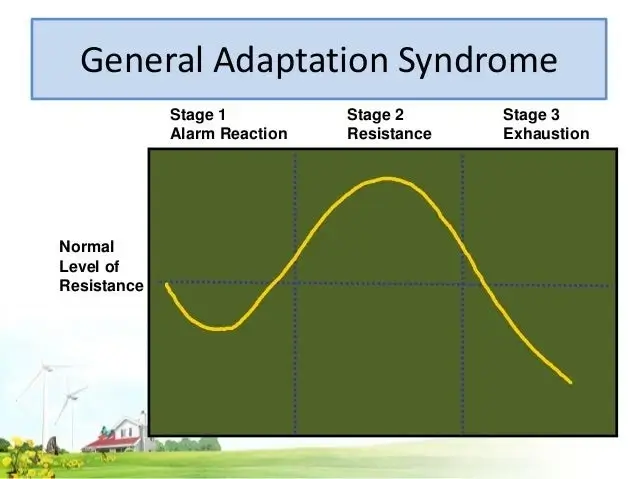
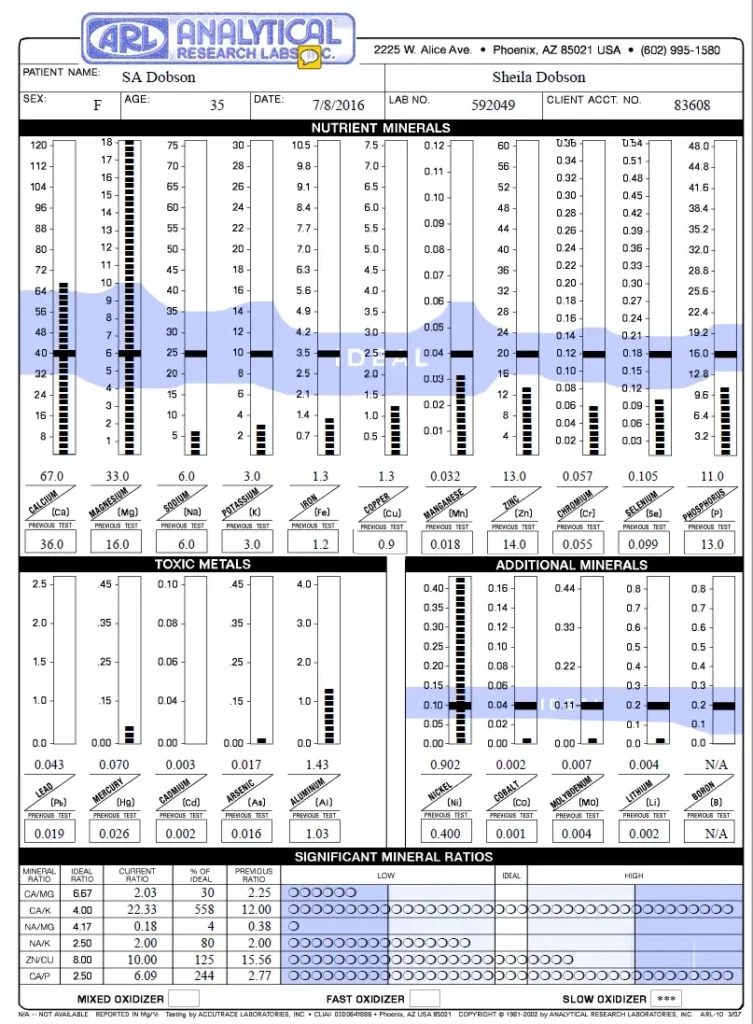
The hair mineral analysis test on the right is showing a resistance stress response with features of the exhaustion stage showing. It also shows toxic levels of nickel and mercury, low thyroid function and weak adrenal function. It is showing a pattern that most likely indicates a problem with magnesium utilization in the body.
Important Note About Proper Laboratory Procedure:
In order for a hair mineral analysis test to properly reveal the true values of certain nutrients, the hair sample must not be washed at the laboratory. Many laboratories utilize a wash procedure before the analysis is done. This wash is done with harsh chemical stripping agents designed to remove “external contaminants” which at the same time removes a portion of the more soluble elements from the hair (for example, sodium and potassium, two key electrolytes). This skews test results so that they cannot be used to assist in the understanding of a person’s metabolic state and nutritional needs. The two laboratories in the USA that do NOT wash the hair before analysis are Analytical Research Laboratories (ARL) and Trace Elements Incorporated (TEI).
A Hair Test Reveals Important Nutritive Mineral Levels
A hair mineral test shows levels of nutritive minerals. For example, copper, iron, zinc, manganese, chromium, lithium, boron and others.
Our bodies cannot function without the proper minerals to operate our enzymatic functions. If you have inadequate iron levels, you will not be able to make enough hemoglobin which is needed in our red blood cells to carry oxygen through the blood to our tissues.
If you have inadequate copper levels you will not be able to generate white blood cells sufficiently to fight infections, as copper is a key player in the body’s white blood cell production. Copper is also critical for the functioning of the citric acid or Kreb’s cycle through which our biochemical processes generate ATP. ATP is essentially our energetic “currency.” Cellular processes cannot proceed properly without proper production of ATP.
Without adequate magnesium, some 400 enzymes within the body’s biochemical machinery will function at lower than optimal capacity. This encompasses everything from brain neurotransmitter function to the peristalsis that moves the food and waste through the intestines.
These are only a few simple examples.
Toxins and Excesses of Minerals Are Hazardous Too
Excesses of toxins, or even excesses of nutritive minerals, cause problems just as much as do deficiencies. Some minerals will build up in a person’s body and cause problems if their detoxification and elimination systems are working poorly or if certain other problems are occurring.
Summary
The important point here is that a hair mineral test, properly performed and interpreted by a knowledgeable practitioner, can be a powerful tool for assessing a person’s nutritional status. This then can guide nutritional therapy.
Through the type of nutritional therapy facilitated by hair mineral analysis and true forms of “Nutritional Balancing,” it is possible to assist people with health recovery and overall strengthening of the body that is not possible to obtain with most other modern methods of nutritional therapy. This is because there is a very powerful scientific basis underlying the use of these tests.
Why, If This Is A Viable Tool That Is Accurate And Scientifically Sound, Have I Never Before Heard Of It?
The fact that hair mineral analysis is not well known at this time is not a result of its lack of power or veracity but rather various other factors which have tended to make it occupy a status deemed by most conventional health professionals as “unscientific” or even outright fraudulent. This is an error that is beginning to be corrected at this time.
Something else to be aware of is that this form of nutritional therapy and healing is not appropriate for everyone, mainly because not everyone will want to accept the slower pace of real healing which these nutrition plans can provoke.
In the case of children, especially those who are not seriously ill, the path to full health recovery can be relatively smooth. However, once illness has become rooted in a person’s body — which is often the case with adults in poor health — often there will be some hurdles to overcome as the deeper healing takes place. In some cases this is difficult for people to accept, since it may require lifestyle or other changes that may be challenging.