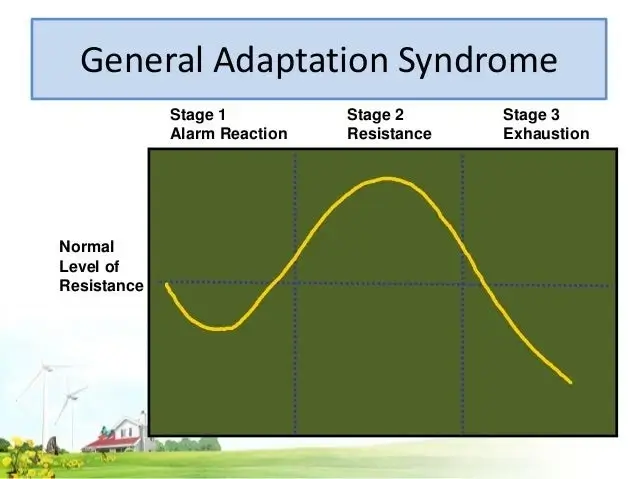

General Adaptation Syndrome (GAS) is a description of how our bodies respond in a predictable way to stress. In particular this theory helps us to understand how our bodies respond over time to ongoing stress.
This theory was introduced by Hans Selye, a Canadian endocrinologist, in 1936.
Selye’s theory is that the body responds to stress in three distinct stages:
- the alarm reaction
- the resistance stage
- the exhaustion stage
The relevance of this theory to Nutritional Balancing and Hair Mineral Analysis is that a hair test has, as one of its most important benefits, the ability to very accurately point to the stage of stress a person’s body is in.
Not only that, once we know the stage of stress a person is in, we can address the body’s mineral needs from that vantage point. For example, a person in the exhaustion stage of stress who is at the root of their biochemistry, a fast oxidizer, will almost always need supplemental copper. On the other hand, a person who is in the exhaustion stage of stress who is at the root of their biochemistry, a slow oxidizer, will almost always require zinc, and they need to avoid copper. There are many variations and combinations, but the point is that all sorts of indications for specific, individualized nutritional needs are found on a hair test, so long as one understands how to properly interpret the test.